
mood diary app for beginners
Mood Diary notes for recording feelings in a non-medical daily diary
A mood diary app for beginners page should do more than repeat app features. This one starts with mood diary app for beginners, then turns that moment into a short entry you can actually finish.
You will get a copyable frame, a concrete example, and a Mongle Haru fit that uses only the feature that helps this exact situation.
Pin down recording feelings in a non-medical daily diary
The most useful first line is the visible part of the day: mood diary app for beginners. Once that is on the page, the entry no longer has to carry every thought at once.
Add where you were, what shifted, and what you want to remember. That gives the note a reason to exist even when it stays short.
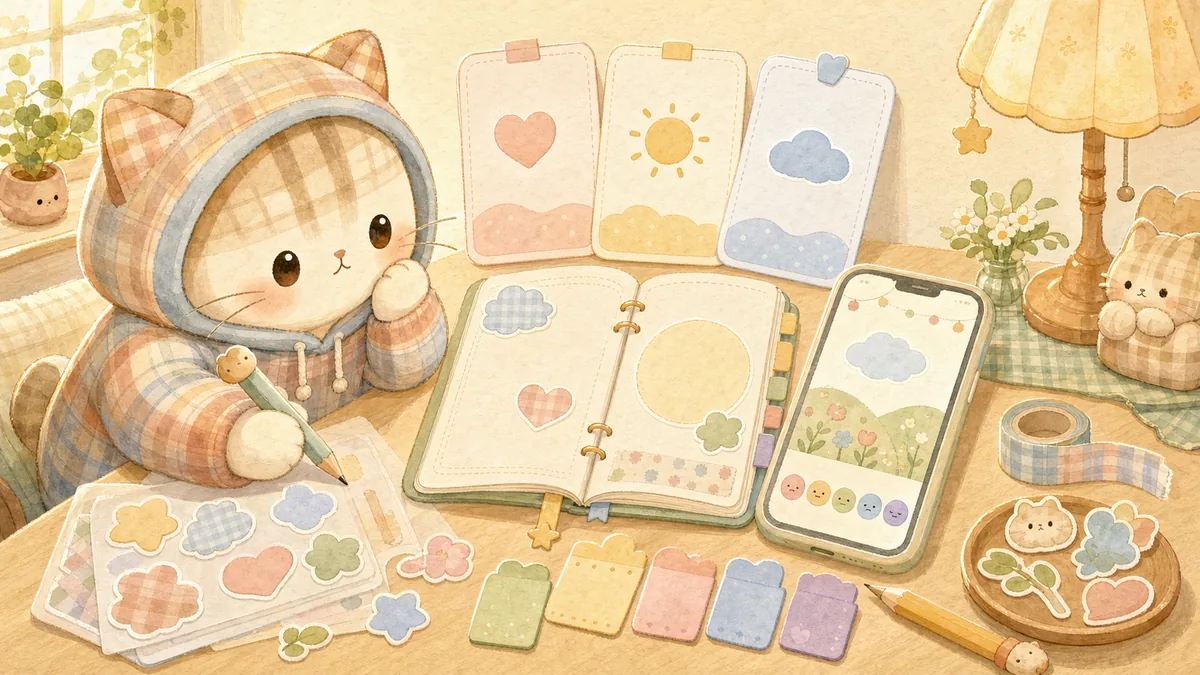
A three-line frame for mood sticker card
Fill this before choosing decorations:
What happened: ___. What I felt: ___. What should make sense later: ___.
The frame keeps the page useful. It also stops a mood diary app for beginners from turning into a blank setup project.
| Check | Reason |
|---|---|
| One real scene | Gives the entry context |
| One named feeling | Keeps the tone personal |
| One reread cue | Makes the page useful later |
A stronger first sentence for recording feelings in a non-medical daily diary
Instead of "I should write something today," try: "I want to remember mood diary app for beginners, because it made me feel ___." That sentence gives you a scene and a direction.
After it, add one sensory cue: a color, a sound, a message, a table, a route home, or a tiny win. Small cues make private entries feel alive.
Choose the feature for mood sticker card
Pick the visual layer only after the written line works. A mood sticker can mark tone, a photo can hold a visual memory, a timeline fragment can split a busy day, and a prompt can help when the first line is hard.
The feature should clarify the entry, not become the entry.
How Mongle Haru fits mood diary app for beginners
Mongle Haru fits when the entry can stay small: one written line, one mood cue, and an optional visual detail. For recording feelings in a non-medical daily diary, choose the feature that makes the memory clearer.
You do not need to use every feature. The best page is the one you can finish and understand later.
The reread test for mood sticker card
Before saving, ask: will this page still make sense in a week? If it only says a mood word, add one scene detail. If it already has a scene, feeling, and cue, stop.
That stopping point matters. A small finished entry is more inviting than an overbuilt page you never return to.
FAQ
What should I write first for mood diary app for beginners?
Start with recording feelings in a non-medical daily diary. Write one sentence about what happened, then add one feeling and one cue that will make the memory clear later.
Should I add visuals before writing about recording feelings in a non-medical daily diary?
Write the core sentence first. Add a sticker, photo, or timeline fragment only when it makes recording feelings in a non-medical daily diary easier to understand or revisit.
How can Mongle Haru support recording feelings in a non-medical daily diary?
Mongle Haru supports short writing, mood stickers, optional photos, timeline fragments, collected stickers, and playful prompts, so you can choose the one layer that helps mood diary app for beginners.
Write one entry for recording feelings in a non-medical daily diary
Open Mongle Haru, save mood diary app for beginners in one sentence, then add one sticker, photo, timeline fragment, or prompt only if it makes the page easier to revisit.